

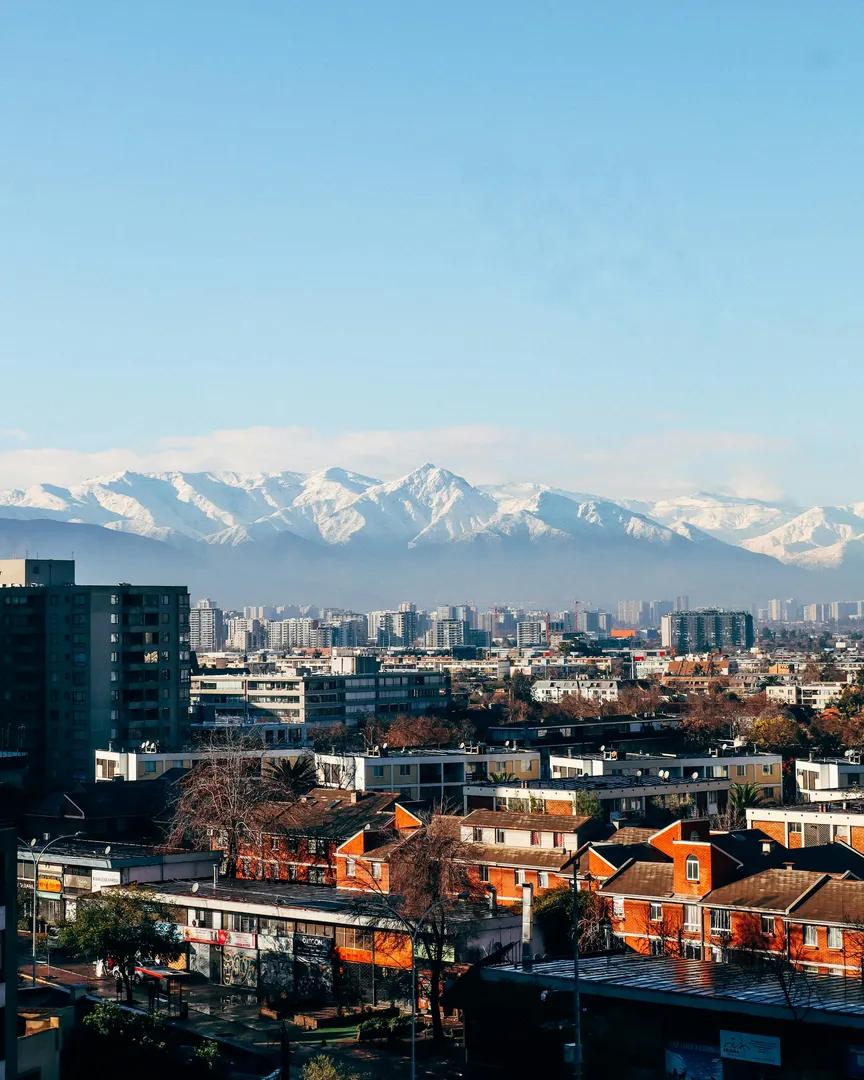
Each year, around 19,000 international students choose Chile for all or part of their studies. That is a small figure compared with Spain or Canada, which makes the experience all the more immersive (and a little more demanding to prepare logistically).
This guide brings the essentials together: the paperwork, the real cost ranges, how Chilean universities work and the practical steps to land without stress. Up to date for spring 2026.
Why study in Chile in 2026
Chile is, by most education rankings, the Latin American country with the strongest university system. 5 Chilean universities appear in the QS Latin American top 100. Programmes in economics, law, engineering and international relations are particularly well regarded.
Beyond the rankings, three concrete reasons push international students to choose Chile:
- Language immersion. Chile is 100% Spanish-speaking, with a Chilean accent reputedly fast but one the ear adjusts to within a few weeks. You leave a semester with a level of Spanish that genuinely changes your professional life.
- Geographic and cultural diversity. One hour by plane from Santiago, you can be in the Atacama desert, on a beach or in the Andes. Few countries offer such variety in such an accessible territory.
- Cost of living. Lower than a typical Western European student city. With an Erasmus+ or regional grant, the budget is comfortable.
Santiago concentrates the majority of international university programmes, but Valparaíso and Viña del Mar (90 minutes away by bus) are very popular with students who want to combine studies with coastal life.
The Chilean universities to know
Here are the five universities that welcome the most international exchange students, and that Flatmaters partners with for housing.
Universidad del Desarrollo (UDD)
A private university with campuses in Santiago (Las Condes) and Concepción. Known for medicine, business and international relations. Many programmes are taught in English, the atmosphere is cosmopolitan, and the school has strong ties with European business schools.
Universidad Técnica Federico Santa María (USM)
One of Latin America's leading engineering schools, based in Valparaíso with branches in Santiago and Viña del Mar. The training is highly technical and the campus is known for its student life.
Universidad Adolfo Ibáñez (UAI)
A private business school in Peñalolén (Santiago) and Viña del Mar. Consistently ranked among the top business schools in Latin America. Many exchanges with European institutions such as HEC, ESSEC, IE, ESADE and London Business School.
Universidad Mayor
Main campus in Santiago (Huechuraba), branch in Temuco. Their international welcome programme is well-oiled, particularly active for international students in law, design and health sciences.
Universidad Andrés Bello (UNAB)
One of the largest private universities in Chile, with campuses in Santiago (Republica, Casona), Viña del Mar and Concepción. A wide exchange offer including programmes in English.
Worth noting: Universidad de Chile and the Pontificia Universidad Católica de Chile, two historic public universities, also welcome international students through their own inter-university agreements and dedicated exchange programmes.
Visa and entry to Chile
This is the step that worries students the most before departure. The good news: for the vast majority of exchange students, it is straightforward.
The tourist permit (90 days)
Citizens of the European Union, the United Kingdom, the United States and many other countries automatically receive a tourist permit on arrival in Chile, valid for 90 days. No paperwork is needed before departure. That is enough for a short semester or a summer school.
The prórroga (90-day extension)
If your stay exceeds 90 days (the common case for a full 5-month exchange semester), you can extend your tourist permit once directly from inside Chile. The procedure is called the prórroga de turismo. It is filed online on the Servicio Nacional de Migraciones website before the first 90 days expire, for a cost of around USD 100. It grants 90 extra days, which covers the length of a standard Chilean academic semester.
The alternative: leave and come back
Another option for extending your stay without going through the prórroga: leave the country and come back. On re-entry, you receive a fresh 90-day tourist permit. This is the perfect occasion to travel in the region (Mendoza in Argentina, Cusco in Peru, Salta or Uyuni in Bolivia) while also resetting your stay, with no prórroga fee to pay.
The student visa
For longer programmes (full year, master's, PhD) that go beyond what tourist permit + prórroga can cover, an official student visa is available, to be requested at the Chilean consulate in your home country before departure. This is the more formal route, required for students enrolled in full-degree programmes.
Good to know
Visa rules can change. Before you travel, confirm the current conditions on the official website of the Chilean consulate in your country of residence. Forum threads or third-party sites are often outdated.
University registration step by step
In 95% of cases, if you go on exchange via your home university, your international relations office handles the application. You will need to provide:
- An academic file (transcripts, CV, motivation letter)
- A Spanish proficiency test (DELE B1 or B2) or, for some universities, an English level certificate (TOEFL or IELTS)
- A copy of a valid passport
- One reference letter from a professor
Application calendars follow the Chilean semesters:
- First semester. Classes from March to July. Applications to be submitted between September and November of the previous year.
- Second semester. Classes from August to December. Applications to be submitted between March and May of the same year.
If you apply as a free mover (outside an exchange agreement), allow at least 6 months before the start of the semester to launch the paperwork. Each university has its own criteria and registration fees (typically between USD 50 and 200).
Cost of living in Santiago and beyond
Here is a realistic monthly budget for a student in Santiago in 2026, excluding tuition (figures calibrated with Numbeo and our own experience on the ground):
- Rent. EUR 380 to 700 (£325-£600 / $415-$770) depending on the format and area (room in a shared house: EUR 380-500 / £325-£430 ; furnished studio in central Santiago: EUR 550-700 / £470-£600)
- Groceries. EUR 150 to 250 (£130-£215 / $165-$275)
- Public transport. EUR 30 to 50 (£25-£45 / $33-$55) using the Bip! rechargeable card, valid on metro and buses
- Going out, leisure, restaurants. EUR 100 to 200 (£85-£170 / $110-$220)
- Phone. EUR 5 to 15 (£4-£13 / $5.50-$16.50) depending on the plan (Claro, Movistar and Entel offer competitive data plans)
- Internet. EUR 15 to 25 (£13-£22 / $16.50-$27.50) generally included with the housing
- Extras and unexpected costs. EUR 50 to 100 (£43-£85 / $55-$110)
Total: between EUR 700 and EUR 1,350 per month (£600-£1,160 / $770-$1,485) depending on lifestyle. Most students we host live comfortably on around EUR 800-900 per month in Santiago, with room to travel one or two weekends a month without holding back.
If you study in Valparaíso or Viña del Mar, expect a monthly budget closer to EUR 600 to 1,100 (£515-£945 / $660-$1,210) depending on lifestyle. The order of magnitude is similar, with rents generally in the EUR 350-550 range.
Finding student housing in Chile
From experience, this is the most stressful step for international students heading to Chile. The options are:
- University residences. Very limited in Chile, often reserved for Chilean scholarship students. Rarely accessible to exchange students.
- Facebook groups and classified ads. Lots of listings, little verification. Risk of scams, misleading photos and abusive contracts. Handle with care if you are searching from abroad.
- Specialised platforms such as Flatmaters: carefully selected homes, trusted landlords, contracts drafted by us. You pay from your home bank account, no need to open a Chilean account.
Discover our student housing in Chile
Flats, shared houses, rooms with a host: a trusted selection in Santiago, Valparaíso and Viña del Mar.
Find my housingBe cautious of listings with abnormally low rents: they often hide run-down or poorly maintained properties. Every academic year, many international students switch homes after a few weeks because the quality was not what was promised. A trusted home of decent quality always beats a deal that looks too good to be true.
Your first days on the ground
Your plane lands at Arturo Merino Benítez International Airport (SCL), 20 km from central Santiago. From the airport, two options: the Turbus shuttle (around 2,000 CLP, roughly EUR 2 / £1.70) or an official taxi or Uber (around 20,000 to 25,000 CLP depending on traffic).
For the first 7 days, here is the checklist to plan:
- Day 1. Arrival at the home, walk-through, key handover.
- Days 2-3. Chilean SIM card (Entel, Claro or Movistar are the main carriers; budget EUR 5 to 15 / £4-£13 per month with data).
- Days 3-7. Get to know the area, scout the route to campus, first supermarkets and cafés.
- Week 2. Start of term, campus tour, first lectures, first encounters with other international students.
We have hosted over 300 international students in Santiago. The pattern always repeats: the first two weeks are intense, then everything settles down. What really matters is having reliable housing the day you land. The rest sorts itself out as the days go by.
Matthieu, co-founder of FlatmatersFrequently asked questions
Is Chile safe for international students?
Chile is one of the safest countries in Latin America. Pickpocketing can happen in tourist areas or on public transport, especially in Santiago. Standard urban awareness is enough.
The vast majority of international students complete their stay without incident.
Which Chilean universities welcome international students?
Among the most recognised universities that welcome international students: Universidad del Desarrollo (UDD), Universidad Técnica Federico Santa María (USM), Universidad Adolfo Ibáñez (UAI), Universidad Mayor and Universidad Andrés Bello (UNAB). All are housing partners of Flatmaters.
How much does student life in Santiago cost?
Between EUR 500 and 800 (£430-£690 / $550-$880) excluding rent, depending on lifestyle. Student rents range from EUR 380 to 700 (£325-£600 / $415-$770) depending on the format chosen (room in a shared house, furnished studio, or shared flat).
The overall cost stays below that of an equivalent Western European student city.
Can you study in Chile without speaking Spanish?
Yes, it is entirely possible. Some private universities offer programmes taught in English (UAI and UDD in particular). For Spanish-taught courses, many international students arrive at beginner level and progress quickly through immersion.
Between Spanish-for-foreigners courses run by universities, shared housing and daily life in Santiago, Spanish gets picked up naturally on the ground. No need to be fluent before you leave.
Do I need a student visa to study in Chile?
For stays under 90 days, no formal visa is required for citizens of the EU, the UK, the US and many other countries: a tourist permit is issued on arrival.
For a one-semester exchange (around 5 months), the prórroga extends the permit by 90 extra days. For full-degree programmes that exceed that combined window, a formal student visa is required, requested at the Chilean consulate in your home country.
How much does it cost to study in Chile?
If you arrive on exchange via a partner programme, tuition is usually waived. As a self-paying international student, public Chilean universities cost around USD 2,000 to 6,000 per year, while private universities range from USD 4,000 to 10,000 or more.
Application fees per university typically sit between USD 50 and 200.